
Three years as a fractional CMO. Here's what I actually learned.
When I started out as a fractional CMO, I thought I knew what I was doing. Turns out the hard part wasn't the marketing.
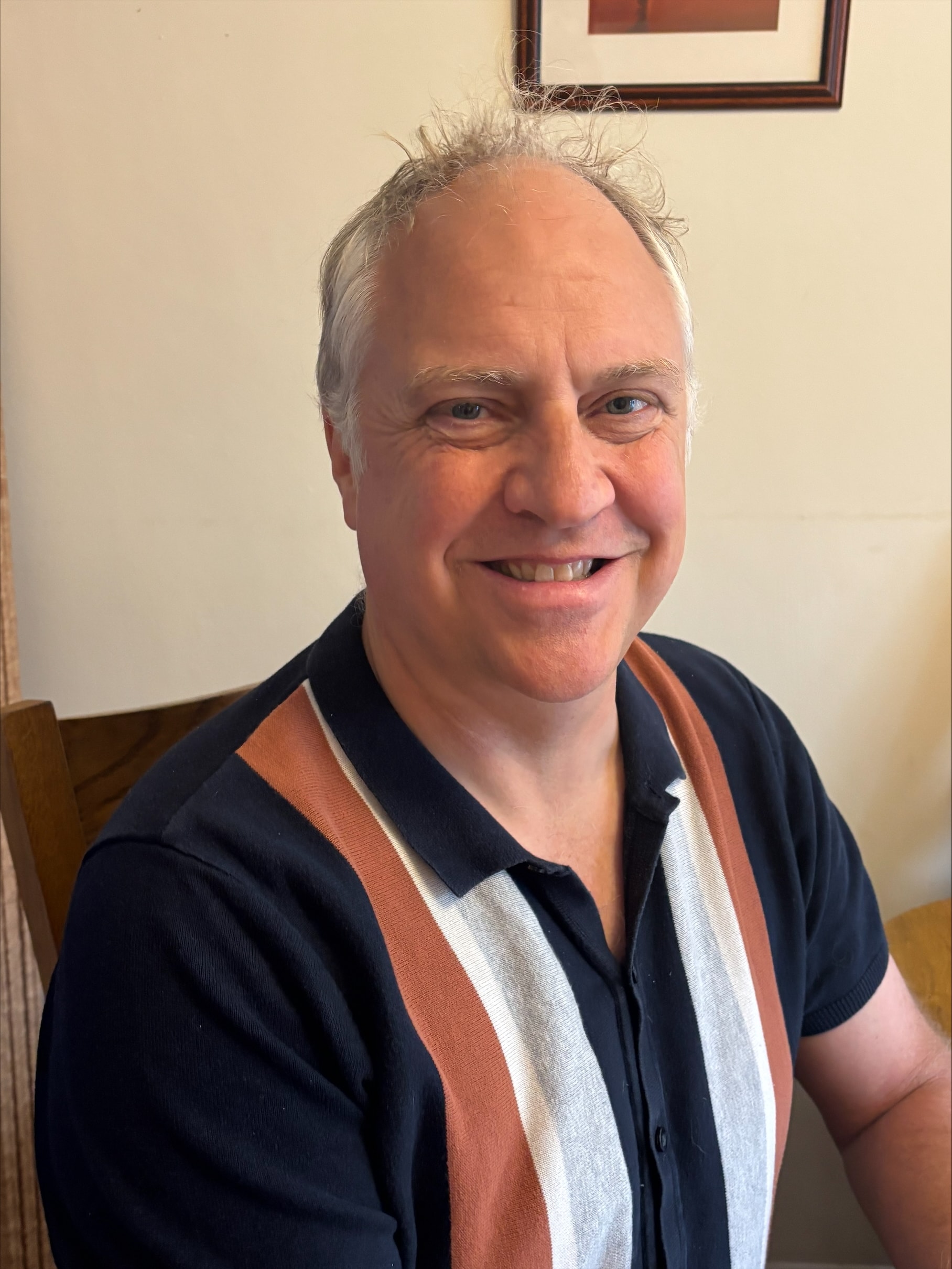
When I started out as a fractional CMO, I thought I knew what I was doing.
I had 30 years of B2B marketing experience behind me, 18 of them at Kantar, across global teams in a division of around 700 people inside a 28,000-person business. I'd been part of leadership teams, I'd seen what works and what doesn't, at scale, more than once. I figured the hard part — the actual marketing — was sorted. What I hadn't really thought about was the bit before that. Explaining what I did, and why anyone should care.
Turns out that was the hard part.
The everything-to-everyone trap
When you've spent decades inside big organisations, you get used to your job being defined for you. There's a title, a remit, a team, a budget line. Nobody asks you to explain yourself because the structure does it for you.
Go fractional and that disappears overnight.
Suddenly you're the one explaining what you do, to people who've never heard of you, in the time it takes to get from one side of a room to the other at a networking event. And if I'm honest, my first instinct was to just say everything. Brand, comms, digital, strategy, internal comms, PR, the lot. Thirty years gives you a lot of boxes you could tick, and I ticked most of them in every conversation.
It didn't work. Not because I couldn't do those things, but because a list of services doesn't tell anyone anything about whether you can help them. It just tells them you're available. And being available isn't the same as being useful.
What actually changed things
The shift came from somewhere I didn't expect — not from a course, not from a book, but from just being out there, talking to business owners at networking events, over and over again, and slowly noticing a pattern.
People didn't really want to know what I did. Not at first. They wanted to know who I was, and whether they liked me — people buy from people, after all. That's not a cynical observation, it's just true, and I think marketers in particular forget it because we're so used to thinking about audiences and positioning that we sometimes skip the bit where we're just supposed to be a person someone else might want to work with.
Once that bit was sorted, what they actually wanted was for me to show I'd understood their business — not recited my CV at them. They didn't want a list of what I did unless it was specific to them. Generic credibility is fine for a first impression, but it doesn't hold a conversation.
And only after that — only once they felt heard — did anyone actually want to hear practical thoughts about marketing.
It sounds obvious written down like that. It wasn't obvious to me at the time. I knew it, somewhere, the way you know all sorts of things you don't actually act on. One of my old teachers used to say you've got two ears and one mouth, use them in that ratio. I'd heard that for years. It took an embarrassingly long time for it to actually change how I behaved in a room.
Building something out of the pattern
Once I'd noticed that pattern enough times, I started wanting a better way to act on it. Not a script, exactly, but something that let me show a business where their marketing was working and where it wasn't, without me just talking at them about strategy in the abstract.
That's what became the G.R.O.W framework — Growing Curious, Recognising Needs, Options Evaluation, Working in Partnership. It maps the stages a B2B buyer actually goes through, and it's deliberately simple, because most of the businesses I work with don't want a six-month strategic plan before they can do anything. They want to know what to focus on now, while building something more lasting for later. G.R.O.W gives us both things at once — a practical entry point and a structure that holds up over time.
I won't pretend I sat down one day and designed it cleanly. It came out of repetition, out of having the same conversation enough times that I started noticing where businesses kept showing up, and where they kept missing the mark. Most businesses pour the bulk of their effort into the evaluation stage — proposals, pitches, brochures — while buyers have usually been thinking, researching, and forming opinions long before they ever get there. By the time most marketing shows up, the decision is already taking shape.
What works for one business doesn't work for another
Here's the bit I probably should have learned faster than I did. Even with a framework, even with a clearer way of explaining myself, no two businesses need the same thing from me.
Some want a sounding board. Some want someone to actually do the work. Some want strategic input but need it delivered in small, usable pieces because they can't wait for a finished plan. Some have a brand problem dressed up as a lead generation problem, or vice versa, and the first job is just working out what's actually wrong before suggesting anything.
That meant listening couldn't be a one-off thing I did at the start of a relationship and then stopped doing once I'd "understood" the business. It had to keep going. Still catch myself getting it wrong sometimes — assuming I know what a client needs because it's similar to something I've seen before, when actually it isn't, not quite, and the differences matter.
The bit nobody tells you about being fractional
There's a particular kind of loneliness to fractional work that I wasn't fully prepared for. In a corporate role, you've got peers. People doing similar jobs, hitting similar walls, who you can complain to or compare notes with. As a fractional CMO, you're often the only marketing person in the room, working across multiple businesses, none of whom know what the others are dealing with.
That's partly why networking has ended up mattering more to me than I expected when I started. Most of my work is with SME businesses, and groups like Woko-Loco Networking, Business Junction and the Federation of Small Businesses (FSB) have been genuinely useful — not just for finding clients, but for understanding how different businesses actually juggle everything. Businesses I meet through these groups are often dealing with the same problem in a slightly different shape — limited time, limited budget, too many priorities — and seeing that pattern repeat across industries has taught me as much as any client engagement has.
The Slice Network serves a different purpose. It's specifically other fractional CMOs, and that's been valuable in a way the SME networking isn't — it's somewhere to learn from people doing the exact same job, bounce ideas around, and admit the bits that are genuinely hard without having to explain the context first. Having peers who get the specific weirdness of fractional CMO work has mattered more than I expected it to.
What I'd tell myself three years ago
Stop leading with the CV. Lead with curiosity about the business in front of you.
A list of services is forgettable. A specific understanding of someone's actual problem isn't.
Saying "I'm not sure yet, let's find out" builds more trust than pretending you've got it all figured out on day one. Clients can tell the difference, even if they can't always articulate it.
And listening is a skill, not a personality trait. You don't get to claim you're a good listener just because you're not naturally loud. You have to actually practise it, in the room, every single time, including the times you're tired or rushed or convinced you already know the answer.
I knew most of this in theory three years ago. Knowing it and doing it consistently turned out to be two very different things. I suspect that gap never fully closes — it just gets a bit smaller with practice, and you get a bit quicker at noticing when you've drifted back into talking too much.
That's roughly where I am now. Still learning it. Probably will be for a while yet.
If any of this struck a chord, I'd genuinely like to hear about it. If you fancy a chat about where your own marketing might be showing up — or not — book a time here. No pitch, just a conversation.
Explore Topics
Written by
Ralph Risk
Ralph Risk FCIM is a B2B marketing consultant and Fractional CMO with 30 years' marketing experience. He is the founder of R.R Marketing and creator of the G.R.O.W framework.